What Makes Ostafyevo Different from Moscow's Commercial Airports
Ostafyevo (OSF) vs Moscow's big three airports: FBO procedures, customs handling, and real door-to-door transfer times for business travelers.
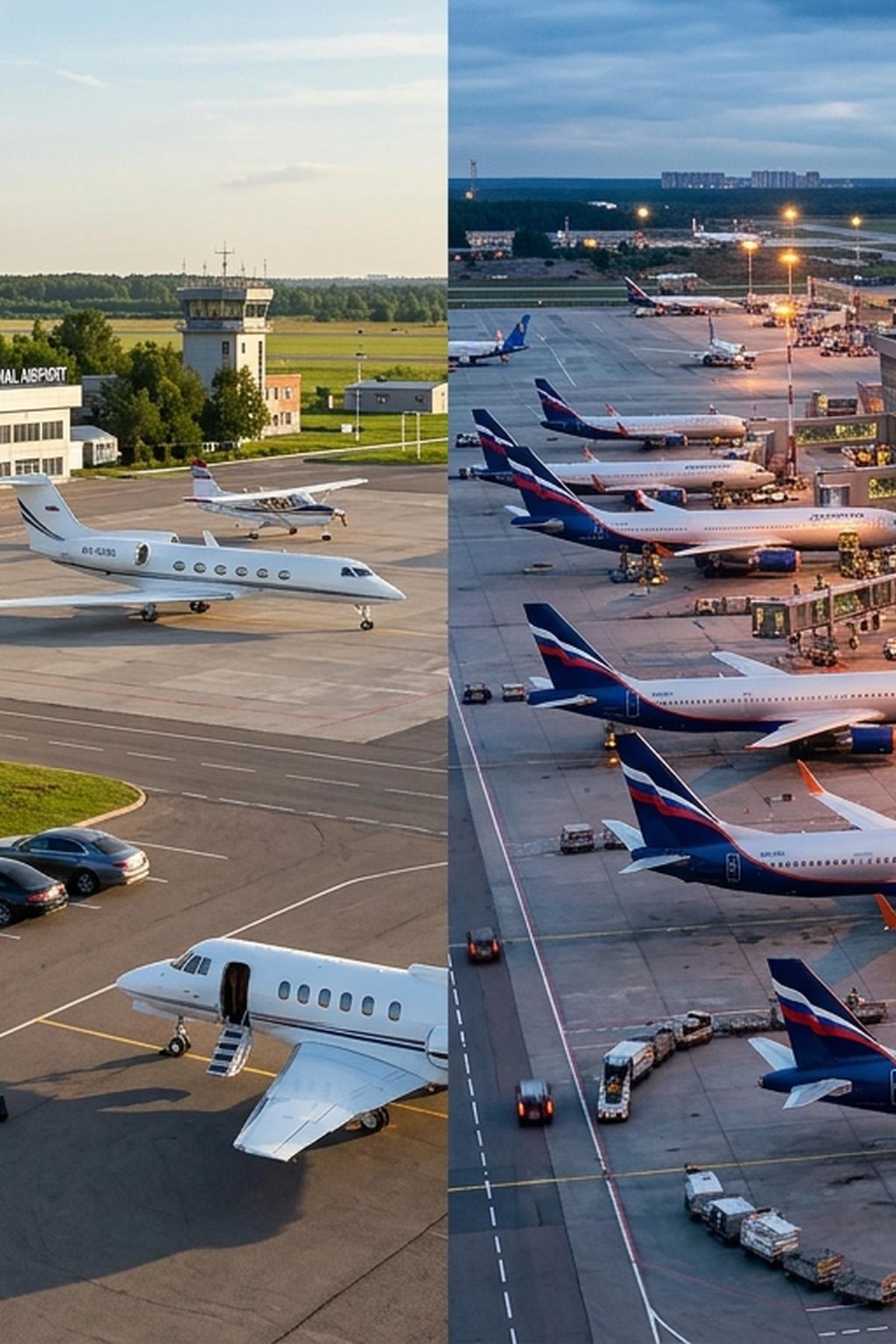
Moscow has three commercial airports that most travelers know by name. Domodedovo, Sheremetyevo, and Vnukovo handle tens of millions of passengers per year between them. But there is a fourth option that sits quietly south of the city, largely invisible to anyone flying on a commercial ticket. Ostafyevo Airport operates in a completely different world from those three giants. Understanding that difference can reshape your entire approach to Moscow business travel, and the gap is bigger than most first-time private aviation users expect.
Ostafyevo (OSF) is a dedicated business aviation airport, not a commercial hub. It processes private jets and charter flights through a compact FBO terminal with no airline crowds, separate customs handling, and a southern Moscow position that cuts transfer times to specific districts. For the right traveler, it shaves real hours off the door-to-door journey. For the wrong itinerary, it introduces complexity that a commercial hub would avoid.
Why Airport Classification Changes Everything for Business Travelers
Not all airports serve the same function, and the label matters more than most travelers realize. Domodedovo, Sheremetyevo, and Vnukovo are classified as international commercial airports. They are built around high passenger volume, airline schedules, and the infrastructure required to move thousands of people per hour through security, boarding gates, baggage reclaim, and customs halls. The design is optimized for throughput, not for any individual traveler's time.
Ostafyevo is classified differently. It operates as a general aviation and business aviation facility, which means its entire setup is oriented toward a smaller number of aircraft movements handled with far more per-passenger attention. For anyone who wants to understand how airports work at a structural level before narrowing down to what that means specifically at OSF, the distinction between commercial and general aviation infrastructure is the core of it. Ostafyevo holds ICAO code UUMO and does not operate any scheduled airline services. That single fact drives almost every practical difference a business traveler will notice on arrival.
The implications ripple through every stage of the travel experience. From the moment your aircraft lands to the moment you climb into a transfer vehicle heading for the city, the process at Ostafyevo bears little resemblance to what you would go through at any of Moscow's three main hubs.
What You Actually Experience at the Ostafyevo FBO
Fixed Base Operator terminals are the service centers of business aviation, and the one at Ostafyevo is compact by design. You step off your aircraft and you are a short walk from the building, not a ten-minute transit ride from a remote stand. There is no queue at check-in, no security theater involving hundreds of strangers, and no announcement board counting down a delayed commercial departure. The terminal exists to handle you, your crew, and the other passengers on your aircraft. That is the entire scope of it.
Ground handling at OSF works with a level of pre-arrival coordination that commercial airports cannot replicate at scale. Your aircraft is met on the apron, refueling is arranged in advance, and the handling agent typically already knows your passenger count and documentation requirements before touchdown. This preparation is standard practice in business aviation, and it is a primary reason why the total time between wheels down and sitting in your transfer vehicle can be measured in minutes rather than the better part of an hour.
The FBO lounge itself is functional rather than lavish. Comfortable seating, Wi-Fi, refreshments, and enough quiet to hold a conversation without broadcasting it to the entire building. It is designed for people who need to work, not for people killing time between connecting flights. Business travelers who visit OSF repeatedly appreciate the predictability. The terminal does not change much from visit to visit, which means your routine there becomes reliable in a way that large commercial airports rarely are.
Customs and Border Processing at OSF
Customs and border control at Ostafyevo is handled on-site, with Russian Federal Customs Service officers present to process arriving and departing international flights through the FBO terminal. The practical effect of running through a dedicated business aviation channel rather than a shared commercial arrivals hall is that processing times are significantly shorter, assuming your documentation is in order.
Russia's customs requirements for private aviation arrivals remain exacting. Passenger declarations, the general declaration for the aircraft itself, and full crew documentation all need to be submitted through the correct channels before landing. Working with a ground handler or aviation concierge service that knows OSF's specific procedures is genuinely important here. The airport is not a major international commercial hub, which means the margin for documentation errors is thinner than at Domodedovo. Border officers expect clean paperwork, and any discrepancies take longer to resolve when there is no large administrative machinery behind you.
For departing flights, the export process follows a similar pattern. Customs clearance, passenger check-out, and aircraft documentation all happen at the FBO. Under normal conditions, the time between arriving at Ostafyevo to board and actually lifting off is tighter than at any commercial airport in Moscow. That is one of the clearest efficiency arguments for OSF when your outbound schedule is compressed.
Ground Transfer Times from Ostafyevo into Central Moscow
Ostafyevo sits approximately 35 kilometers south of central Moscow, positioned between the city's outer ring road and the town of Podolsk. That geography creates specific advantages and disadvantages depending entirely on where you are heading in the city.
If your destination is the Kremlin area, the business districts of Zamoskvorechye, or any point along the southern arc of Moscow, transfer times from Ostafyevo are genuinely competitive. Under light traffic conditions, the drive to central Moscow via the Simferopolskoye Highway runs around 40 to 55 minutes. During morning rush hour, that same journey can stretch to 90 minutes or longer. Moscow traffic is unforgiving, and the highway approaches from the south are among the more congested corridors in the city.
Compare that to Domodedovo, which sits roughly 42 kilometers southeast of the center and shares similar road traffic exposure on the M4. Sheremetyevo, further north at around 29 kilometers from the center, benefits from the Aeroexpress rail link, which removes road conditions as a variable entirely. That rail connection is a material advantage for Sheremetyevo passengers traveling to destinations near Belorussky Station or the northwestern center. Ostafyevo has no rail link. Your only options are road transfers by private car, taxi, or a hired driver. That is a real constraint, and it belongs in your planning before you confirm the airport.
Vnukovo is the closest geographic comparison to OSF, sitting about 28 kilometers southwest of the center. Vnukovo also has an Aeroexpress connection running regularly. For travelers whose destinations fall along the western or southwestern arc of the city, Vnukovo carries a transfer time advantage over Ostafyevo even before factoring in the commercial terminal processing time that partially offsets the rail link's speed benefit.
When the Business Aviation Option Genuinely Saves Time
The time-saving argument for Ostafyevo is strongest in specific, identifiable situations. If you are arriving on a private or charter aircraft, you have already bypassed the commercial terminal experience. The question then becomes whether OSF's southern position works for your itinerary or against it.
For meetings in the south of Moscow, in Podolsk, in the Leninsky district, or in the outer ring zones below the third transport ring, Ostafyevo is simply closer. The transfer is shorter, and the math is clear. For a day that begins with meetings in the south and works northward through the city, landing at OSF and moving progressively toward the center is a logical operational structure.
The FBO processing advantage is most visible when placed against a comparable commercial terminal arrival at Domodedovo. A passenger arriving internationally on a commercial airline at Domodedovo can realistically expect 20 to 40 minutes in passport control queues, 20 to 45 minutes waiting at baggage reclaim, and a walk to ground transport before a vehicle is even moving. At Ostafyevo, a well-prepared private arrival can be in a car heading for the city within 15 to 25 minutes of landing. The airport's small footprint eliminates the queuing and walking distances that inflate terminal dwell time at the commercial hubs. That saved time is real, and for a traveler on a tight schedule, it accumulates across the trip.
When Vnukovo Is the Smarter Call
Vnukovo handles both commercial traffic and business aviation. Its dedicated business aviation terminal operates separately from the main commercial building, meaning private and charter passengers can access FBO-style handling at an airport that also offers the Aeroexpress rail link. For travelers whose destinations cluster around western Moscow, the Arbat district, or the city center west of the Kremlin, Vnukovo's geographic position reduces transfer time by a meaningful margin.
Vnukovo also works with a larger pool of ground handling providers, which gives charter operators more scheduling flexibility and introduces some competitive pressure on handling fees. If your charter operator offers a choice between Vnukovo and Ostafyevo and your destination is in the western half of the city, Vnukovo is likely the stronger logistical choice. The processing experience is broadly comparable, though Vnukovo's business aviation terminal handles higher traffic volumes than OSF, which introduces slightly more variability in wait times during busy periods.
For very early morning or late-night arrivals, Ostafyevo's quieter environment can tip the balance back the other way. Fewer movements mean handlers are less stretched, and the process can feel more attentive. Vnukovo's higher throughput means more aircraft and passengers moving through even off-peak windows, which adds coordination complexity on the ground.
Picking the Right Airport Before Your Schedule Is Set
The most useful moment to think about whether Ostafyevo or one of Moscow's three commercial airports fits your trip is before your itinerary is confirmed. The airport choice ripples forward into your ground transport budget, your transfer time estimates, your meeting buffer windows, and your exposure to the unpredictability of Moscow road traffic on any given morning.
Ostafyevo is the right call when you are traveling on a private or charter aircraft, your meetings are concentrated in the south or southeast of the city, and you value the controlled, low-footprint experience of a facility built specifically for business aviation. It is the wrong call if you are on a commercial ticket, if your schedule depends on a rail connection to avoid road traffic risk, or if your destination falls in the north or northwest of Moscow where Sheremetyevo's Aeroexpress link delivers a consistent, traffic-independent transfer.
Ostafyevo is not trying to compete with Domodedovo or Sheremetyevo. It exists for a specific category of traveler and a specific category of aircraft movement. When the fit is right, it works very well. When it is not, the limitations are clear enough that choosing it anyway would add friction rather than remove it. Knowing which situation you are in before you land is the real skill, and it starts with understanding exactly what Ostafyevo was built to do.